Europe Adventure Trips, Planned by Experts Who Understand Europe
Rafting, hiking, via ferrata and hut hikes sequenced so you can actually keep going. We balance intensity across the week and place recovery where your body will want it.
This is a starting point. You decide the pace, the days and the details. We design it with you.
Who this style works for
Sequenced intensity
Big days spaced so you finish the trip strong instead of wrecked.
Right conditions
Activities placed by season, river levels and mountain conditions rather than convenience.
Vetted operators
Local partners chosen for safety records, guides and equipment.
Room to add more
Space kept in the plan for the extra climb or trail walk you decide on.
Who this style is really for
Adventure here is not one thing. It runs from a long hike with a naturalist to whitewater and multi-day trekking, and the whole design depends on where you sit on that scale.
Active travellers who want variety
You would happily raft one day, hike a mountain the next and surf on the third, as long as somebody has thought about recovery in between.
Experienced outdoor people
You climb, dive, ride or run at home and want conditions that challenge you rather than a photo opportunity. We calibrate upward for you, with guides who work at that level.
Groups of friends
Mixed ability, high spirits. We split days by intensity so nobody is either bored or terrified.
Couples and families who want one big thing
The rest of the trip is relaxed, but you want one day that raises your pulse. That is a very common and very good brief.
This may not be your style if
- You want a checklist of famous activities regardless of whether they fit together.
- Nobody in the group wants to get wet, muddy or up before six.
- You expect technical mountain terrain without preparation or a qualified guide. Alpine routes require an honest assessment of experience.
- You need certainty. Rivers, surf and weather all move, so an adventure trip needs alternatives built in.
How we approach this style
First we calibrate intensity. We ask what you have done recently rather than what you can imagine doing, because that is what predicts an enjoyable day. Then we match the operator to that level, since the same activity name can mean very different things depending on who runs it.
Then we build in recovery. Adrenaline without rest becomes a grind by day four. Hot springs after canyoning, a beach afternoon after a summit hike, one full day with nothing on it in every week.
We sequence for altitude, weather and recovery. High trails can retain snow into summer, and afternoon thunderstorms change mountain plans. River levels and surf also vary, so regions follow your dates rather than the reverse.
And we keep alternatives ready. If a river is too high or a trail closes, your guide should already know what you are doing instead, rather than calling us for permission.
What we ask you before we design anything
- What have you actually done in the last year: distances, elevation, water, heights?
- Is anyone uneasy about heights, confined spaces or strong currents?
- How does the group feel about early starts?
- Do you want one big challenge or steady activity every day?
- Are you happy to get wet and muddy, or is that a hard no for part of the group?
- Any injuries, dietary needs or medication we should plan around?
- How much of the trip should be recovery: beaches, hot springs, slow mornings?
Building blocks we combine
Individual pieces, graded by intensity, combined to suit the group rather than a fixed itinerary.
Whitewater rafting
Gentle class two floats through wildlife-rich valleys, up to sustained class four on the Soča. Different rivers, different seasons.
Canyoning and waterfall rappelling
Harnesses, ropes and cold water. Short, intense and a good introduction to real exposure.
Canopy and aerial routes
From family ziplines to long, fast, high traverses. We are specific about which is which.
Volcano and summit hikes
Half-day trails on lava fields, or long ascents with early starts and real elevation gain.
Surfing
First lessons on forgiving beach breaks, or coaching and boards for people who already surf.
Wildlife tracking and night walks
The quiet kind of adventure. Skilled guides, patience and animals most visitors never see.
Sea kayaking, SUP and lagoon paddling
Low impact, often at dawn, and a good recovery-day option.
Diving and snorkelling
From easy reef days to advanced boat trips for experienced divers only.
Mountain biking and horseback riding
Farm tracks, mountain woodland edges and coastlines, graded to your experience.
Multi-day trekking
Remote routes with basic accommodation, for people who genuinely want the effort.
Regions that shine for this style
These are flexible European examples, not a route to collect. We choose around your dates, energy and realistic connections.
Jungfrau region
Valley walks, demanding mountain routes and rail access, graded to the group.
Soča Valley
Rafting and canyoning with qualified guides. River levels determine what can run.
Italian Dolomites
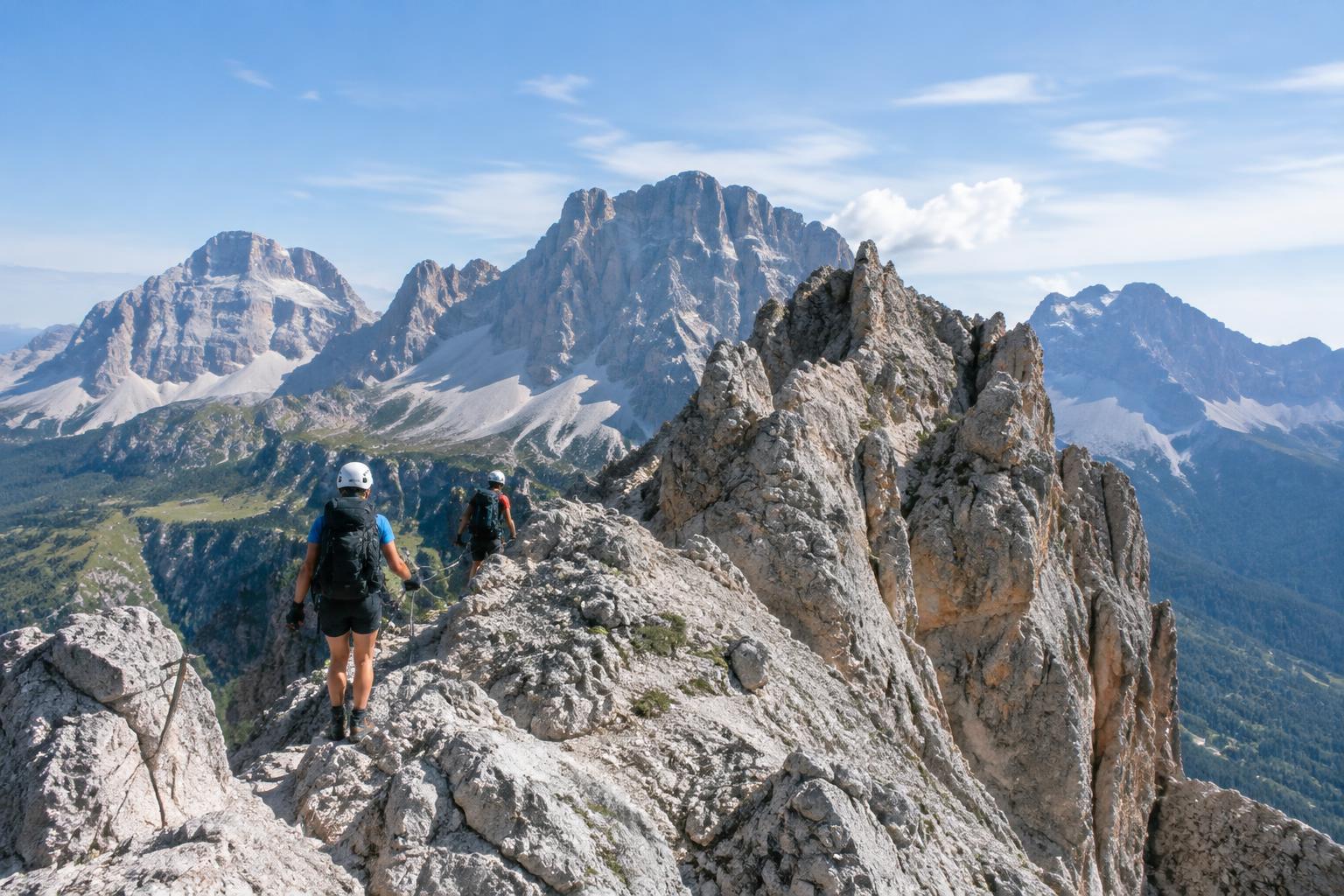
Via ferrata and hut hikes, with equipment, experience and snow conditions checked.
Portuguese Atlantic coast
Surf coaching and coastal walks, with beaches chosen for ability and conditions.
Picos de Europa
Limestone trails and village bases. Weather can change quickly at elevation.
Julian Alps
Multi-day walking and lake recovery days, with hut reservations essential in summer.
Zermatt
High mountain scenery and well-connected trails, with careful altitude planning.
Honest trade-offs
Adventure planning is mostly about accepting what a choice costs elsewhere.
Big whitewater
Travelling in the wetter months and accepting that levels can change your day.
The driest likely conditions
Lower rivers, drier landscapes and more crowded trails.
Several activities every day
Fatigue by day four and less enjoyment of each one.
Remote wilderness trekking
Long transfers, basic accommodation and changeable mountain weather.
Consistent surf for improvers
Committing to one coast and one season rather than roaming.
A mixed-ability group kept together
Some days pitched below the strongest members' level.
Practical considerations
- Pace
- One demanding day, then one easier. Two or three regions in ten nights, never more.
- Early starts
- Most good adventure days start between five and seven, for heat, wind and wildlife. We keep the evenings light in return.
- Guides and operators
- We choose by safety record, guide experience and equipment age, and we tell you which activities we would not book at all.
- Where you stay
- Comfortable but practical: hot showers, laundry, secure gear storage, and food available when you get back late.
- Kit
- Broken-in trail shoes, quick-dry layers, a dry bag and a head torch. Technical gear comes from the operator.
- Insurance
- Check that your policy covers rafting, canyoning, diving and rappelling. Many standard policies do not.
Seasonality for this style
Season changes what is possible more here than in any other style.
| When | What to expect |
|---|---|
| March to May | Spring brings mild days to much of southern Europe, with rain possible. Easter can be busy; high Alpine trails may remain snowbound. |
| June | Long days and warming seas, before the busiest school holidays. High mountain routes and lifts open at different dates. |
| July and August | Peak crowds and rates, especially on coasts and lakes. Southern heat calls for early outings; Alpine thunderstorms need flexible plans. |
| September and October | Often a good shoulder-season balance in the south, with harvests and fewer visitors. Rain increases and mountain services begin closing. |
| November to February | Short days, quieter cities and seasonal closures on many coasts. Alpine snow supports winter trips, not summer hiking; festive weeks can be busy. |
How we decide how many places you visit
Activity clusters, not distance, set the number of bases.
| Nights | Places to stay | Why |
|---|---|---|
| 5 to 6 | One | Bohinj alone can fill a week of varied adventure with hot springs to recover in. |
| 7 to 9 | Two | An inland adventure hub plus a coast for surf and recovery. |
| 10 to 12 | Three | Room to add a whitewater base or a mountain woodland without cutting recovery days. |
| 14 or more | Three or four | Enough for remote trekking or a multi-day route, plus a proper wind-down. |
If the list is too long for the nights, we will tell you which activity to keep and which to save for next time.
Examples of how this has worked
Anonymised, with no prices and no fixed routes.
Four friends with nine nights, high fitness
Four nights in the Jungfrau region alternated long walks and easier valley time, followed by two in Zermatt and three in the Dolomites for a guided via ferrata and a hut hike. Rail linked the Swiss bases; the onward connection needed a full transfer day.
A couple in their fifties who wanted one big day
A relaxed Slovenian trip revolved around one guided rafting day on the Soča. We placed it after several easier days, checked the river and their recent experience, and kept the following afternoon for recovery.
Questions we are often asked
How fit do I need to be?
Short hikes and gentle water activities can suit ordinary fitness. Via ferrata, sustained climbs and demanding rivers require recent relevant experience, appropriate equipment and a qualified guide.
When is the best rafting?
It depends on the river. Alpine snowmelt often raises spring and early-summer flows; rainfall and local restrictions can change conditions throughout the operating season.
Is it safe?
The good operators here are genuinely professional, with international certification and well-maintained equipment. The variation between operators is large, which is precisely why we choose rather than book the cheapest.
Can a mixed-ability group travel together?
Yes, and it works best when we split some days rather than pitching everything to the middle.
What if the weather ruins a planned day?
Your guide carries alternatives, and we keep enough slack in the plan that one lost day does not cascade.
Related reading
Where to go from here
Tell us what you have done recently, how hard you want this to be and how much recovery you want, and we will send a first shape with intensity already calibrated. Push it up or down freely.
This is a starting point. You decide the pace, the days and the details. We design it with you.