Gentle Europe Travel for Comfort and Wildlife
For travelers in their 50s, 60s and beyond, people recovering from a busy year, anyone rebuilding mobility, and multigenerational groups where grandparents set the tone. We keep the Europe feeling vivid while making each day easier to enjoy.
This is a starting point. You decide the pace, the days and the details. We design it with you.
Who this style works for
Shorter days
Wildlife and nature without filling every hour or ending every day tired.
Accessible choices
Boardwalks, gentler trails, smoother transfers and realistic walking times.
Built-in recovery
Quiet afternoons, comfortable stays and time to rest between highlights.
Grandparent-led pace
Plans shaped so older travelers can participate fully instead of sitting out.
Who this style is really for
Gentle travel is for people who still want Europe to feel alive, but do not want the trip to ask for more energy than it gives back.
Travelers in their 50s, 60s and beyond
You want wildlife, forest, coast and culture, but with realistic walking, sensible departure times and comfortable places to pause.
People recovering from a busy year
You want the trip to restore you. The agenda should leave space for naps, slow breakfasts and unhurried afternoons.
Travelers rebuilding mobility
You may be moving well but carefully. We pay attention to steps, slopes, surfaces, vehicle access and how long you are on your feet.
Multigenerational families
Grandparents set the tone without younger travelers feeling shortchanged. The design creates shared moments and optional extra energy.
Curious travelers who prefer ease
You want the guide, transfer and timing to remove friction so your attention stays on birds, trees, food and conversation.
This may not be your style if
- You want early starts, long hikes and multiple activity blocks every day.
- You would rather cover the greatest possible distance than feel good at dinner.
- You measure a trip by how many places you can tick off.
- You are happy to accept rough access, steep trails and uncertain facilities for a more remote experience.
How we approach this style
We design from energy first. Instead of asking how much can fit into a day, we ask how the day should feel at four in the afternoon. That changes drive lengths, lunch timing, guide choice, hotel location and the number of nights in each place.
Gentle does not mean passive. It can include wildlife walks, boat safaris, farm visits, thermal springs, cooking, coffee, light adventure and beautiful beaches. The difference is sequencing. A rewarding morning is followed by an easy afternoon.
Accessibility is handled honestly. Europe includes cobbled streets, steep villages, stations with limited step-free access and seasonal mountain services. We verify the details that matter to you before anything is confirmed.
For multigenerational groups, we build a shared core and optional edges. Everyone can be together for the most important moments, while more active travelers can add a surf lesson, canopy or longer walk without pulling the whole group into it.
What we ask you before we design anything
- How many hours per day should feel active, and how many should feel open?
- What walking pace, stairs, slopes or surfaces should we avoid?
- Do you prefer wildlife from trails, boats, gardens, decks or short guided walks?
- Would you rather stay closer to places or accept longer transfers for quieter surroundings?
- How important are air conditioning, pool access, restaurant quality and room comfort?
- Who in the group sets the pace, and who may want optional extra activity?
- Any dietary needs, mobility considerations, heat sensitivity or recovery time we should protect?
Building blocks we combine
Comfortable pieces that still feel like Europe, chosen for access, timing and recovery.
Private naturalist walks
Shorter routes with a guide who adapts the speed, shade and stopping points to the group.
Boat-based wildlife
Canals, wetlands, lagoons and river mouths let you see birds, waterbirds and reptiles with less walking.
Thermal springs and recovery afternoons
Warm water, early dinners and no pressure to do anything after a travel day.
Accessible hanging bridges and gardens
Forest immersion without committing to a hard trail or muddy footing.
Wine, olive oil and cooking experiences
Human, sensory mornings with seating, shade and a natural pace.
Scenic drives with meaningful stops
Transfers broken by viewpoints, lunch, gardens or wildlife stops rather than rushed roadside pauses.
Beach time with practical comfort
Gentler surf, shade, nearby facilities and accommodations that do not require long walks for every meal.
Optional activity branches
One part of the group can add more intensity while the rest keeps the day easy.
Regions that shine for this style
These are flexible European examples, not a route to collect. We choose around your dates, energy and realistic connections.
Quieter Portugal
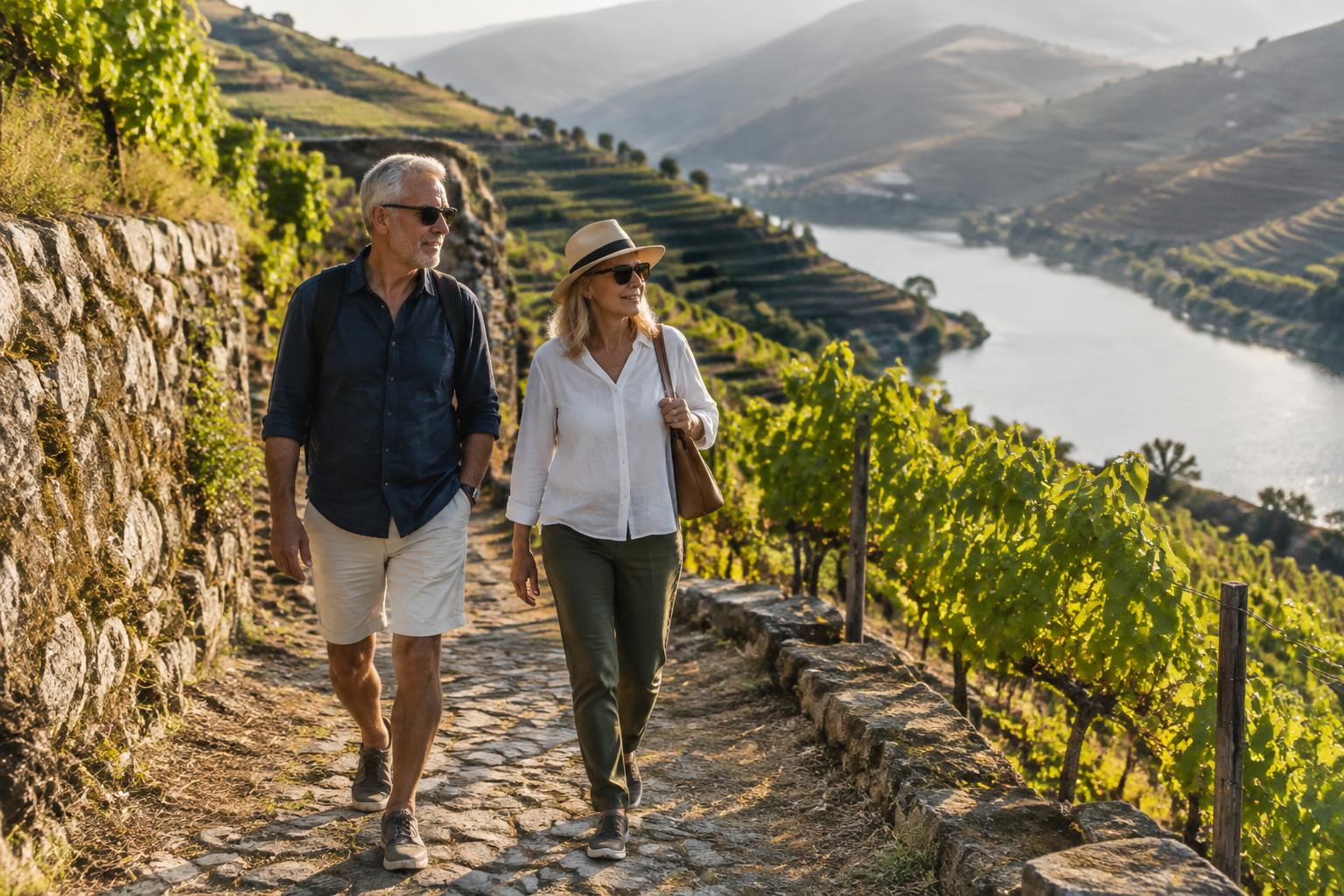
Alentejo and the Douro offer settled bases, with hills and summer heat considered.
Tuscany and Umbria
Country stays and short town visits, with step-free room access checked individually.
Basque Country
Coastal promenades and good food, choosing stays close to what you want to do.
Slovenian countryside
Farm stays and gentle nature outings without changing hotels every other night.
Coastal Galicia
Village bases and shorter coastal paths, with rain alternatives and tides considered.
Accessible Alpine valleys
Lakeside paths and lifts can bring mountain views within reach. We verify gradients and operating dates.
Honest trade-offs
Ease is designed, and it means choosing some things over others.
Shorter, easier days
Fewer total activities and less room for last-minute additions.
More wildlife with less walking
More boat time, guide fees and careful timing around weather and tides.
Maximum comfort
A shorter list of regions and sometimes more polished, busier areas.
More privacy
Private transfers and guides, which can mean fewer shared costs and a higher overall spend.
Remote nature
Longer drives, less medical proximity and simpler facilities.
Every generation together
The itinerary follows the gentlest pace, with optional add-ons for faster travelers.
Practical considerations
- Pace
- One main activity per day is usually enough. Every second or third day should have a protected recovery window.
- Transfers
- We avoid stacking long drives back to back and prefer routes where the travel day has comfortable stops.
- Accommodation
- Ground-floor rooms, short walks to restaurants, reliable air conditioning and easy access matter more than a dramatic view.
- Guiding
- The right guide is patient, observant and willing to stop often. That can matter more than the exact trail.
- Mobility
- We ask about stairs, balance, walking distance and vehicle height early, then match the plan to those realities.
- Health and heat
- Humidity, midday sun and early starts can be harder than the activity itself, so we plan shade, hydration and downtime.
Seasonality for this style
Gentle trips work year-round, but comfort changes with heat, rain, crowds and road conditions.
| When | What to expect |
|---|---|
| March to May | Spring brings mild days to much of southern Europe, with rain possible. Easter can be busy; high Alpine trails may remain snowbound. |
| June | Long days and warming seas, before the busiest school holidays. High mountain routes and lifts open at different dates. |
| July and August | Peak crowds and rates, especially on coasts and lakes. Southern heat calls for early outings; Alpine thunderstorms need flexible plans. |
| September and October | Often a good shoulder-season balance in the south, with harvests and fewer visitors. Rain increases and mountain services begin closing. |
| November to February | Short days, quieter cities and seasonal closures on many coasts. Alpine snow supports winter trips, not summer hiking; festive weeks can be busy. |
How we decide how many places you visit
Gentle travel depends on recovery time, so the number of destinations is deliberately conservative.
| Nights | Places to stay | Why |
|---|---|---|
| 5 to 6 | One | One comfortable base with wildlife, water or forest nearby avoids losing energy to packing and transfers. |
| 7 to 9 | Two | A nature base plus a coast or hot-springs base works if the transfer between them is simple. |
| 10 to 12 | Two or three | Three only when each stay has enough recovery time and the middle transfer is not punishing. |
| 14 or more | Three | Enough time for variety without asking the group to move every couple of nights. |
If comfort or mobility is central, we remove a destination before we remove rest.
Examples of how this has worked
Anonymised, with no prices and no fixed routes.
A couple in their sixties after a demanding year
Two settled bases in Portugal gave them birdwatching, a hotel pool and no pressure. We chose manageable walks in the Alentejo, planned a comfortable transfer to the Lisbon coast and left every other afternoon open.
A three-generation family with grandparents setting the rhythm
A Basque coastal base gave the grandparents short promenade walks and shared lunches. Younger relatives could add a private surf lesson while everyone else rested. We checked lifts, room access and pickup points rather than relying on a general accessibility label.
Questions we are often asked
Is gentle travel only for older travelers?
No. It is for anyone who wants Europe with more ease, including families, people recovering from stress and travelers who prefer shorter days.
Can we still see wildlife?
Yes. In many cases gentle pacing helps, because wildlife rewards quiet observation, early timing and good guiding more than distance.
Can this work with limited mobility?
Often, yes, but it depends on the details. We ask about steps, surfaces, walking distance and vehicle access before suggesting regions.
Will younger travelers be bored?
Not if the trip is designed with optional edges. They can add selected active moments without changing the whole group's pace.
Does gentle mean luxury?
Not necessarily. It means ease, comfort and realistic days. That can be simple, refined or highly private depending on what you value.
Related reading
Why Longer, Slower Europe Trips Often Work Better
AI May Know a Lot About Travel, but It Doesn't Know You
Where to go from here
Tell us who sets the pace, what kind of comfort matters and what you want to avoid physically, and we will shape a first plan that keeps Europe vivid without making the trip feel demanding.
This is a starting point. You decide the pace, the days and the details. We design it with you.