Slow Travel in Europe, Fewer Places, More Depth
Stay long enough for a place to become familiar. Two or three bases instead of six, mornings without an alarm, and time to follow whatever you find interesting.
This is a starting point. You decide the pace, the days and the details. We design it with you.
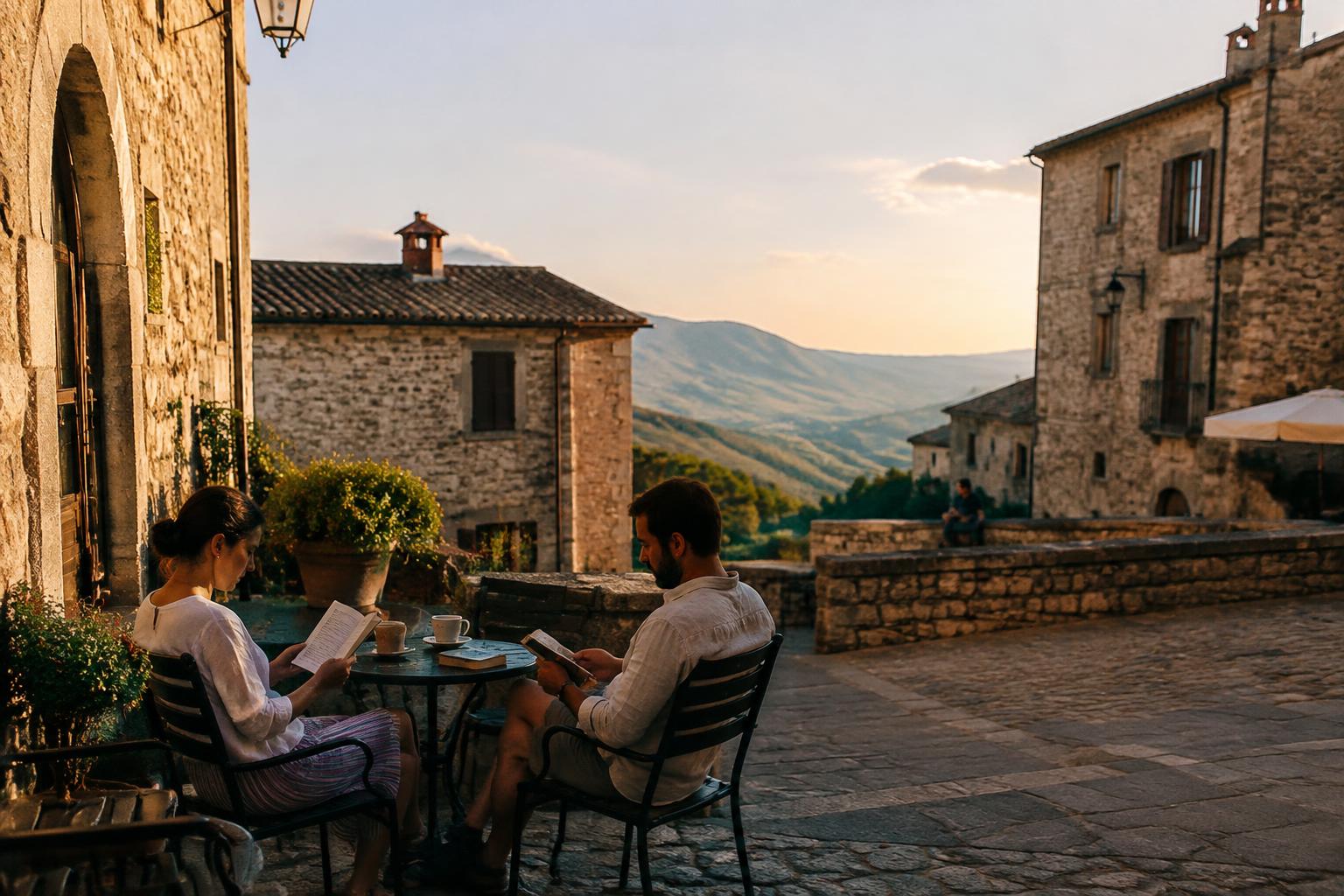
Who this style works for
Two or three bases
Long stays in a few places instead of a new hotel every night.
Open mornings
Days with one plan at most, leaving space for whatever comes up.
Meaningful experiences
Cook with a local family, hike with a naturalist, visit an olive farm and learn about regional traditions.
Easy changes
A plan loose enough to stay another day when somewhere holds you.
Who this style is really for
Slow travel is not doing less. It is noticing more. In practice it means fewer destinations, more nights in each and deliberate room for the unexpected.
Returning visitors
You have seen the headline sights and want to know what a place is like when you stay long enough for the staff to know your order.
Travellers who dislike packing
Two moves in two weeks sounds better to you than six. That single preference improves a Europe trip more than almost any other.
People recovering from a hard year
You want rhythm rather than stimulation: a walk, a swim, a long lunch, an afternoon with nothing in it.
Curious travellers who want to meet people
Cooking with a family, a morning on a olive farm, learning the names of the birds at your window. The relationships are the point.
Remote workers and long-stay travellers
Three or four weeks, one or two bases, and a working rhythm that leaves mornings or afternoons free.
This may not be your style if
- You have one week and want to see the mountain, the mountain woodland and two coasts.
- Empty afternoons make you restless rather than happy.
- You want a fully scheduled trip with something booked each day.
- You need certainty. Slow travel deliberately leaves space for whatever happens, including weather and local timing.
How we approach this style
We start by subtracting. Whatever your list looks like, the first thing we do is ask which two or three places deserve your nights, and we put the rest aside for another trip. Fewer destinations is the entire mechanism.
Then we design the empty days on purpose. An unplanned day is not a gap in the itinerary, it is the part where you find the bakery, talk to a neighbour or go back to the beach you liked. We name them in the plan so they do not quietly fill up.
We follow the rhythms of each region. Southern summer days often suit early outings and long midday breaks; northern evenings can be very long. Market days, meal times and seasonal daylight shape the plan.
We arrange a small number of anchors, usually one every second or third day, and leave the rest to be decided on the ground. Your coordinator stays reachable, so something can be added the day before rather than months ahead.
What we ask you before we design anything
- How many nights do you have, and could you accept only two places?
- How do you feel about an unscheduled day: relaxing or frustrating?
- Do you want a kitchen and a local market, or a lodge that feeds you?
- Beach rhythm, mountain rhythm or village rhythm?
- How much do you want to meet people, and how much do you want to be left alone?
- Are you working while you travel, and if so which part of the day is yours?
- Any dietary needs, mobility considerations or a walking pace we should respect?
Building blocks we combine
Small, human pieces to place sparingly across a long stay.
Cooking with a local family
Shopping, chopping and eating in someone's home, usually the highlight of a slow trip.
A morning on a olive or wine farm
With the family who farm it, at the hour the work happens rather than a tour slot.
Learning your local wildlife
One or two mornings with a naturalist near where you stay, so you can keep spotting on your own for the rest of the stay.
Local language lessons
A few hours a week, enough to change every interaction you have.
The market and a repeated ritual
The same bakery, the same fruit stall, the same sunset bench. Repetition is what turns a place into yours.
A long walk with no destination
River, ridge or beach, with a guide the first time and alone afterwards.
Craft, music and community life
A workshop, a village festival, a football match. Whatever is genuinely happening while you are there.
Deliberately empty days
Planned, protected and left blank.
Regions that reward slowing down
These are flexible European examples, not a route to collect. We choose around your dates, energy and realistic connections.
Alentejo
Markets, village cafés and country stays that reward a week without a checklist.
Umbria
Hill towns, cooking and repeated walks, with rural transport planned in advance.
Galicia’s Rías Baixas
Fishing villages, coastal paths and long lunches, with Atlantic weather part of the rhythm.
Slovenian countryside
Farm stays, village walks and time to return to the same places.
Douro Valley
River views and vineyard life, with fewer outings rather than daily long drives.
French village country
Weekly markets, small guesthouses and ordinary routines beyond the best-known towns.
Honest trade-offs
Slowing down means letting go of things, on purpose.
Depth in two places
You will not see the famous sights in the other four regions.
Genuine local rhythm
Fewer polished facilities, and services that keep their own hours.
Space for the unexpected
Less certainty, and some days that turn out ordinary.
A kitchen and a market
You cook and shop, which takes real time.
The quietest, most rewarding regions
Long, rough journeys to reach them and to leave them.
Meeting people properly
Some effort and a little of the local language, and accepting invitations you did not plan for.
Practical considerations
- Pace
- A minimum of four nights per place, five to seven where you can. One move per week is the ideal.
- The daily shape
- Let local meal times, seasonal daylight and your energy set the rhythm. There is no single European daily timetable.
- Where you stay
- Small guesthouses, family lodges and houses with kitchens. We check the kitchen, the internet and how walkable the surroundings are.
- Getting around
- Rail works well between connected towns; private transfers help with rural stays. A rental car is an option where you want it, not a requirement.
- Working remotely
- Connectivity is good in towns and unreliable in remote areas. If you need calls, we will say plainly which places do not work.
- Booking style
- Accommodation locked in, a handful of anchors reserved, and the rest arranged while you are here.
Seasonality for this style
Slow travellers benefit most from the quieter months, because that is when local life is easiest to join.
| When | What to expect |
|---|---|
| March to May | Spring brings mild days to much of southern Europe, with rain possible. Easter can be busy; high Alpine trails may remain snowbound. |
| June | Long days and warming seas, before the busiest school holidays. High mountain routes and lifts open at different dates. |
| July and August | Peak crowds and rates, especially on coasts and lakes. Southern heat calls for early outings; Alpine thunderstorms need flexible plans. |
| September and October | Often a good shoulder-season balance in the south, with harvests and fewer visitors. Rain increases and mountain services begin closing. |
| November to February | Short days, quieter cities and seasonal closures on many coasts. Alpine snow supports winter trips, not summer hiking; festive weeks can be busy. |
How we decide how many places you visit
This style has the strictest arithmetic of all, and it is the whole point.
| Nights | Places to stay | Why |
|---|---|---|
| 7 | One | One region, day trips only if you feel like it, and at least two empty days. |
| 10 to 12 | Two | Five or six nights each, one move, and one region deliberately quieter than the other. |
| 14 to 18 | Two or three | A week somewhere, then a week somewhere different in character, with slack between them. |
| 21 or more | Three | Long enough to belong somewhere. Often a mountain week, a wild week and a coastal month-end. |
If you have one week and a long list, we will say honestly that a different style suits you better.
Examples of how this has worked
Anonymised, with no prices and no fixed routes.
A couple with sixteen nights and no fixed plans
Eight nights in an Umbrian village brought walks, reading and a little Italian practice, followed by eight on Galicia’s coast with markets and a cooking afternoon. Two reserved experiences a week left room to return to places they liked.
A family with a nine-year-old, three weeks in the spring
Ten nights in a house near a Portuguese market town established a rhythm of shopping, a farm visit and easy walks. Eleven nights on the Alentejo coast followed, with flexible spring days and nothing booked merely to fill the calendar.
Questions we are often asked
What does slow travel actually mean here?
Concretely: no more than one move per week, at least four nights per place, and at least one unscheduled day in every three. Everything else follows from those three rules.
Is one week enough for slow travel?
Yes, if you accept one destination. A week split across two places with drives in between is a different, faster kind of trip.
Won't we get bored?
Rarely, and if you do, that is when the best parts tend to happen. We also leave a short list of options for each area so an empty day can become an active one.
Do we need to speak Spanish?
No, but a little transforms the experience outside tourist areas, which is exactly where this style spends its time.
Can we book almost nothing in advance?
Accommodation should be locked in, especially in the summer. Activities can largely wait, and we stay reachable to arrange them while you are here.
Related reading
Why Longer, Slower Europe Trips Often Work Better
"Top 10 Best Europe Destinations" and Other Unhelpful Questions When Planning a Trip
Where to go from here
Tell us how many nights you have and whether you could live with only two places, and we will send a first shape with the empty days already in it. Nothing about it is fixed.
This is a starting point. You decide the pace, the days and the details. We design it with you.