Eco Travel in Europe, Local and Low Impact
Nature-first travel that supports the people protecting it. Reserves, community-run experiences and locally owned lodges, with routes designed to cut needless driving.
This is a starting point. You decide the pace, the days and the details. We design it with you.
Who this style works for
Local ownership
Stays and guides that keep your spending inside European communities.
Wildlife with care
Experiences that respect the animals, with no interaction gimmicks.
Smarter routing
Fewer transfers and shorter distances, planned rather than accidental.
Protected places
Time in reserves and national parks, guided by people who work in them.
Who this style is really for
Almost everything in Europe is marketed as eco. This style is for travellers who want to know what is actually true on the ground, and who are willing to let that shape the trip.
Travellers who want their money to land locally
You care whether the lodge is family-owned, whether guides are from the area and whether the community sees any benefit. That is a question we can answer property by property.
Wildlife-first travellers
You would rather spend three hours watching one troop of waterbirds with a great naturalist than tick off five stops. Low-impact travel and good wildlife are the same trip.
Families teaching by doing
Reforestation mornings, turtle monitoring in season, a farm where the food comes from. Children remember participating far more than observing.
Travellers uneasy about the ethics of tourism
You want honest answers about captive animals, plastic, water use and whether your presence helps or crowds a place. We will give them, including when the answer is uncomfortable.
This may not be your style if
- You want air conditioning, hot tubs and a fully stocked minibar everywhere. Genuine low-impact lodges make real trade-offs.
- A certificate on the wall is enough reassurance for you. Certification is a useful floor, not proof.
- You want to hold or feed wild animals. We will not book that, wherever it is offered.
- You need short transfers and easy access. The best-protected places are protected partly by being hard to reach.
How we approach this style
We treat sustainability as something you can inspect rather than a label. The national certification scheme is a reasonable starting filter, and we go past it: who owns the property, where the staff live, how water and waste are handled, whether the surrounding land is protected or replanted, and how many guests share the trail at once.
Guides are the heart of it. A naturalist who has worked the same forest for fifteen years finds more, disturbs less and can tell you what has changed there. We would rather spend on that person than on a room upgrade.
We keep groups small and hours sensible, and we avoid the places and times where wildlife is under most pressure. Sometimes that means recommending a less famous park at a quieter hour instead of the one on everyone's list.
We are honest about carbon and about crowding. Flying here has a cost, so we favour longer stays, fewer internal flights and operators reinvesting in conservation, rather than pretending the trip is neutral.
What we ask you before we design anything
- What matters most to you: wildlife, community benefit, low carbon or conservation work you can join?
- What level of comfort do you need: open-air and fan-cooled, or air conditioning?
- Would you like to take part in conservation work, or observe rather than participate?
- How long can you stay in one place? Longer stays are lower impact and usually better.
- How do you feel about longer land transfers instead of rail journeys?
- Any dietary needs, mobility considerations or heat sensitivity to plan around?
- How early are you willing to start for the best wildlife?
Building blocks we combine
Pieces we choose from according to season, region and how involved you want to be.
Dawn walks with a resident naturalist
The single most productive wildlife hours of the day, in small groups.
Night walks and nocturnal wildlife
Frogs, insects, kinkajous and sleeping birds. A completely different forest.
Reforestation and native tree planting
Hands in the soil with the people who run the nursery, not a photo opportunity.
Turtle nesting and hatchling monitoring
Strictly seasonal and site-specific, always with the research or community programme rather than around it.
Community and Indigenous-led visits
Arranged with the community on their terms, where they have chosen to host visitors.
Organic farm, olive oil and wine mornings
Small producers, real work, and a meal from what is growing there.
River and lagoon paddling
Silent, low-impact access to habitats a boat engine would empty.
Birding with a specialist
Serious lists, serious guides, and pre-dawn starts for the species that need them.
Research station stays
Basic accommodation at working biological stations, for travellers who want the real thing.
Regions that shine for this style
These are flexible European examples, not a route to collect. We choose around your dates, energy and realistic connections.
Ljubljana and its surroundings
A walkable city base with rail links, markets and nearby wetlands.
Bohinj and the Julian Alps
Farm stays, guided nature walks and time to understand protected landscapes.
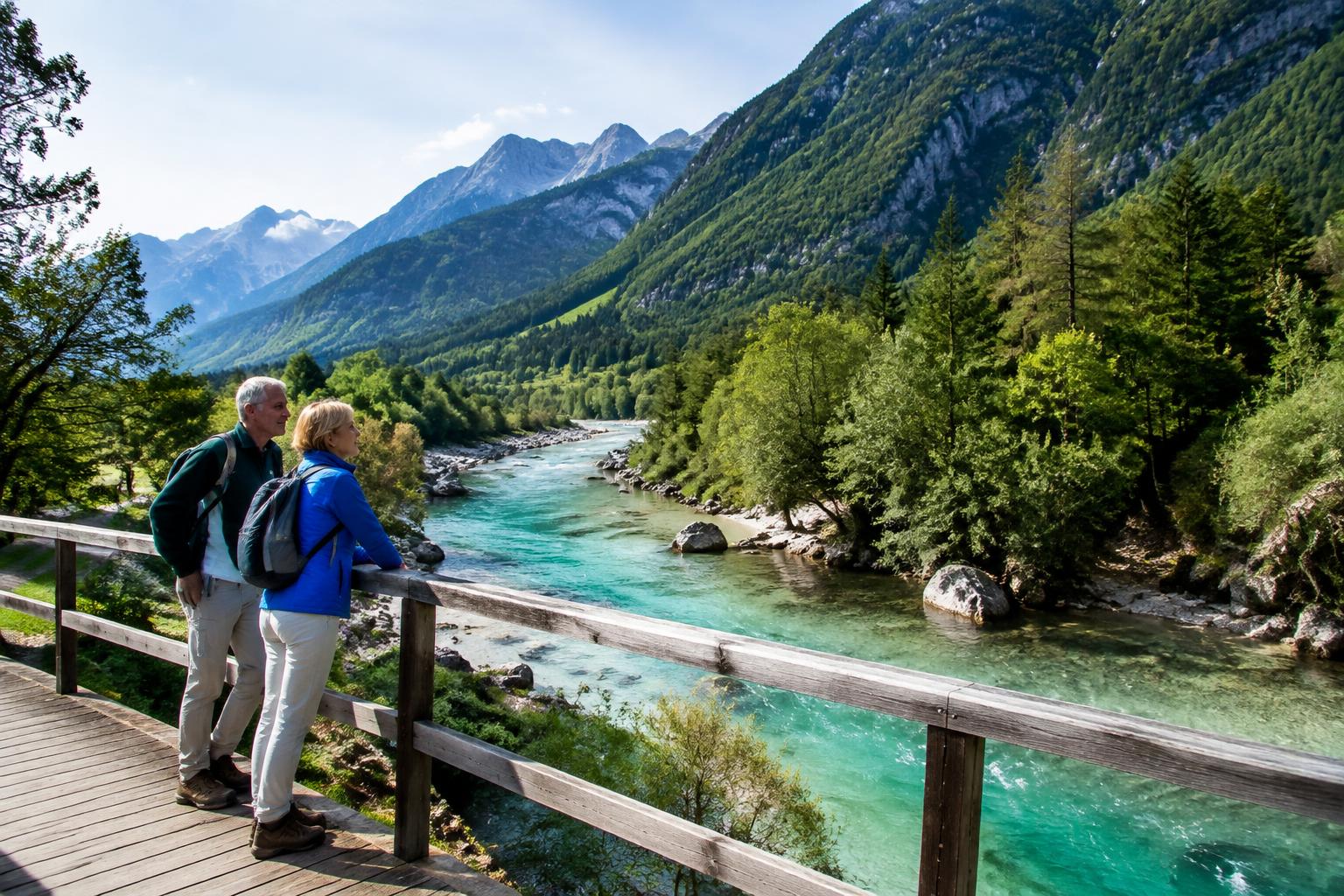
Soča Valley
Small guesthouses and responsible river activities, avoiding pressure on sensitive banks.
Slovenian Karst and Piran
Village producers, cave landscapes and coastal nature, connected with planned transfers.
Alentejo
Cork landscapes, birdwatching and rural businesses, with water use worth asking about.
Austrian Alpine valleys
Rail-accessible villages and family-run stays, with seasonal paths and local food.
Ljubljana and its surroundings
A walkable city base with rail links, markets and nearby wetlands.
Honest trade-offs
Low impact is not always low effort. These are the honest exchanges.
The richest wildlife
Heat, humidity, rain and remote lodges with simpler rooms.
Small operators and local ownership
Less polish, fewer facilities and occasionally slower communication.
The lowest carbon footprint
Long land transfers instead of quick flights, and fewer regions in one trip.
Conservation work you take part in
Fixed dates and seasons, and days that are genuinely tiring.
Air conditioning and full comfort
A shorter list of properties and, usually, more energy and water use.
Empty trails and undisturbed animals
Skipping the most famous parks in favour of less-known ones.
Practical considerations
- Pace
- Fewer places, more nights. Three nights minimum anywhere with real wildlife, four in the Karst.
- Comfort
- Expect fans and screens rather than air conditioning at the best lodges, and pack for humidity rather than fighting it.
- Getting around
- We favour shared land transfers and boats over rail journeys where the time cost is bearable.
- What we will not book
- Animal handling, captive-wildlife photo stops, feeding stations run for tourists, and any operator we cannot vouch for.
- On the ground
- Refillable bottles, reef-safe sunscreen, no single-use plastic, and paying guides directly rather than through third parties where we can.
- Seasonal programmes
- Turtle nesting, whale season and bird migration all have windows. If one matters to you, it sets your dates.
Seasonality for this style
Wildlife, not sunshine, drives the calendar for this style.
| When | What to expect |
|---|---|
| March to May | Spring brings mild days to much of southern Europe, with rain possible. Easter can be busy; high Alpine trails may remain snowbound. |
| June | Long days and warming seas, before the busiest school holidays. High mountain routes and lifts open at different dates. |
| July and August | Peak crowds and rates, especially on coasts and lakes. Southern heat calls for early outings; Alpine thunderstorms need flexible plans. |
| September and October | Often a good shoulder-season balance in the south, with harvests and fewer visitors. Rain increases and mountain services begin closing. |
| November to February | Short days, quieter cities and seasonal closures on many coasts. Alpine snow supports winter trips, not summer hiking; festive weeks can be busy. |
How we decide how many places you visit
For this style, fewer moves is not only calmer, it is measurably lower impact.
| Nights | Places to stay | Why |
|---|---|---|
| 5 to 6 | One | One strong wildlife region with a resident guide beats two shallow ones. |
| 7 to 9 | Two | Usually a mountain woodland or lowland reserve plus one coastal or canal area. |
| 10 to 12 | Two or three | Enough to include the Karst or Piran properly, which both need at least three nights. |
| 14 or more | Three | Room for a research station or community stay alongside two classic regions. |
We will always suggest adding nights before adding destinations.
Examples of how this has worked
Anonymised, with no prices and no fixed routes.
A couple with eleven nights, wildlife above all
Three nights in Ljubljana, four near Bohinj, two in the Soča Valley and two in the Karst and Piran area combined farm stays and guided birdwatching. Rail and private drivers replaced flights between bases, with realistic time allowed for the rural connections.
A family with children aged eight and eleven, nine nights
Three nights each near Ljubljana, Bohinj and Piran combined a farm morning, guided nature walks and coastal birdwatching. Any conservation visit depended on a genuine programme accepting visitors, with observation rather than handling animals.
Questions we are often asked
Is Europe really as sustainable as it claims?
Europe is not uniformly sustainable. We assess transport, water, energy, ownership and conservation practices case by case, rather than treating a destination name as a guarantee.
What are sustainability certifications worth?
There is no single national scheme for Europe. Independently audited labels can help, but we check their scope and current status alongside actual practices and local benefit.
Can we join conservation work as ordinary travellers?
Sometimes, where an established programme welcomes short visits. We confirm dates, supervision and genuine benefit first, and never promise animal handling or access to sensitive sites.
Do we have to give up comfort?
No. Family-run guesthouses and farm stays can offer excellent comfort. We check insulation, heating, cooling and water practices rather than equating rustic rooms with sustainability.
Will we see more wildlife on this kind of trip?
Usually, yes. Fewer moves, earlier starts, smaller groups and better guides are exactly what wildlife viewing rewards.
Related reading
Europe's Quieter Coastal Stretches: Better Questions Than Best Beaches
Travel, AI, and the Things We Cannot Explain
Where to go from here
Tell us what matters most, how much comfort you need and whether you want to take part or observe, and we will send a first shape with the reasoning behind every choice. Change any of it.
This is a starting point. You decide the pace, the days and the details. We design it with you.